
Washington · NE postcodes · Tyne and Wear
Sanitisation & Disinfection in Washington
Looking for sanitisation & disinfection in Washington? We clean schools, academies and nurseries across Tyne and Wear, with vetted cleaners, a named supervisor and a written specification for every site.
In Washington we often clean several schools in the same trust, with one specification and comparable monthly audits.
Guide price in Washington: £140–£540 per visit.
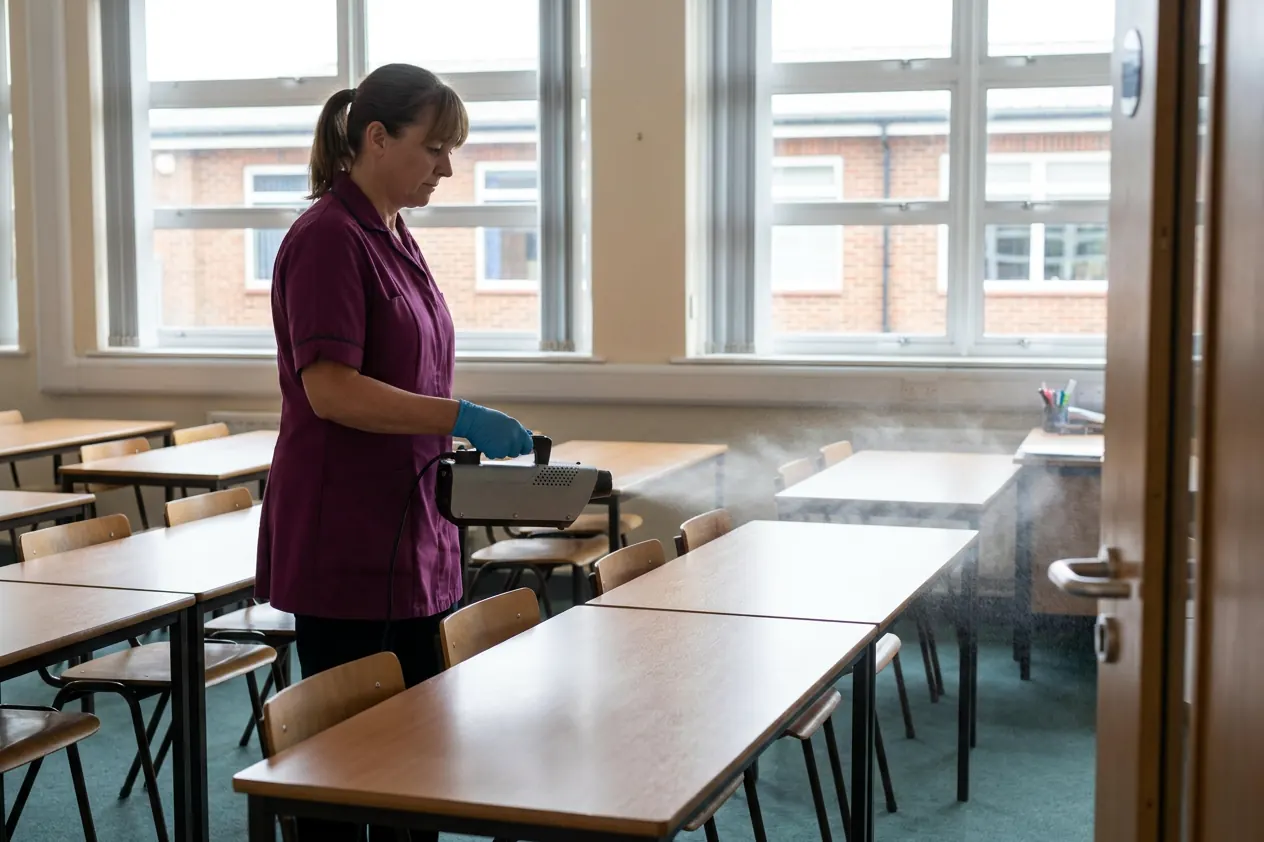
What does sanitisation & disinfection include in Washington?
- Products effective against the organism involved
- Short-notice visits to limit disruption
- Outbreak cleans of affected rooms and toilets
- Increased toilet and touch-point frequency during outbreaks
Why Washington schools use us
Schools in Tyne and Wear tell us the biggest problem with cleaning contractors is inconsistency, so we keep the same cleaners on the same site wherever possible.
Our Tyne and Wear teams cover Washington alongside Newcastle upon Tyne, North Shields and Gateshead, which keeps travel short and lets us cover sickness quickly from nearby staff.
Washington at a glance
- Area
- Tyne and Wear
- Region
- North East
- Postcode area
- NE
- Inspectorate
- Ofsted
- Summer holiday
- Usually late July to early September
- Nearby
- Newcastle upon Tyne, North Shields and Gateshead
What happens next
- 1Free walk-round of your school
- 2Written specification and fixed price
- 3Vetted team and supervisor start on an agreed date
- 4Monthly quality checks and reports
Other school cleaning services in Washington
Sanitisation & Disinfection near Washington
Frequently asked questions
How much does sanitisation & disinfection cost in Washington?
Guide price in Washington: about £140–£540 per visit. The final figure depends on floor area, frequencies and access times, which we confirm on a walk-round.
Do you cover schools near Washington?
Yes. Alongside Washington we cover Newcastle upon Tyne, North Shields and Gateshead and the rest of Tyne and Wear.
What should a school do during a vomiting outbreak?
Follow UKHSA guidance and your local health protection team's advice. Typically that means more frequent cleaning of toilets and touch points with a chlorine-based disinfectant, and safe cleaning of any spillages.