
Cramlington · NE postcodes · Northumberland
Sanitisation & Disinfection in Cramlington
From small primaries to large academies, we deliver sanitisation & disinfection in Cramlington and nearby Blyth, Hexham and Alnwick, priced from a written specification so you know exactly what you pay for.
Many Cramlington schools share a campus with a nursery or children's centre, which we can include in the same contract.
Guide price in Cramlington: £140–£540 per visit.
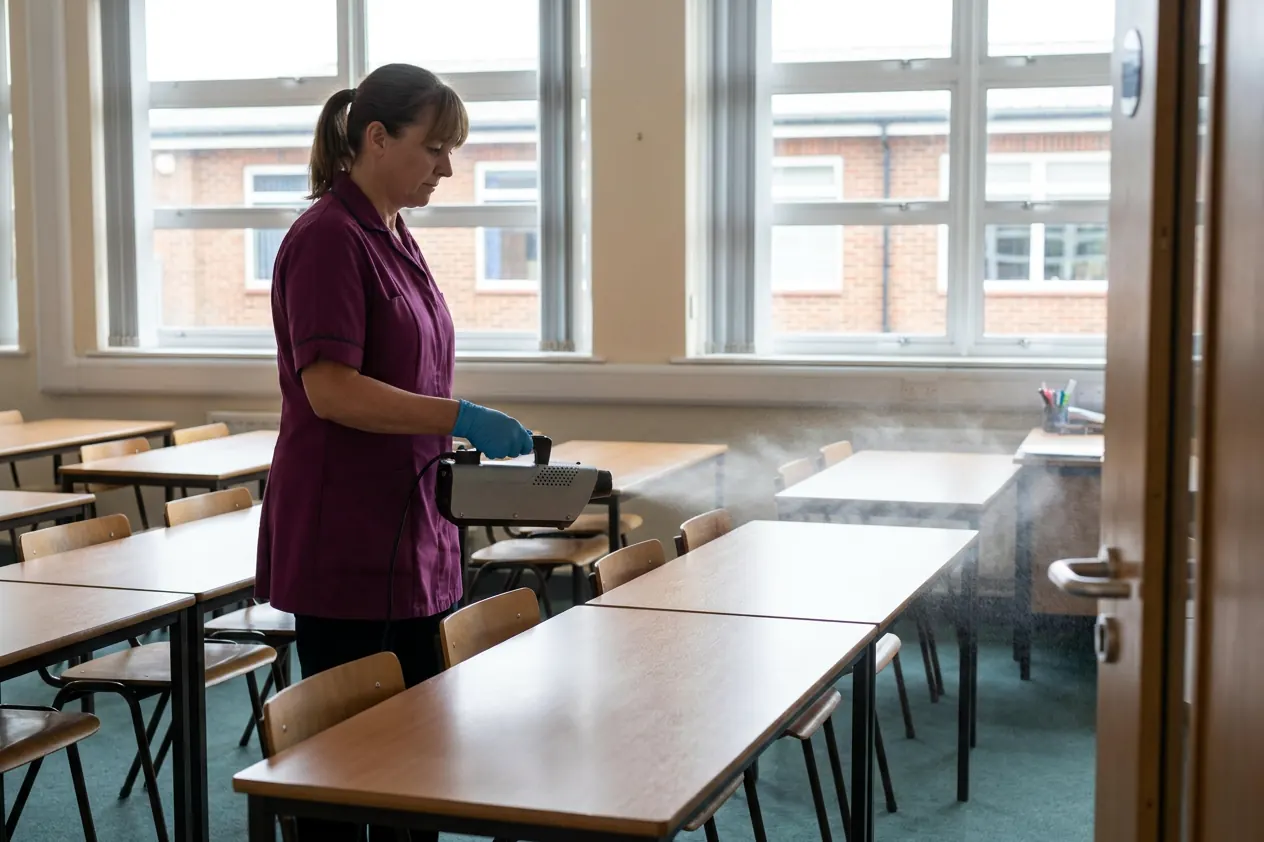
What does sanitisation & disinfection include in Cramlington?
- Outbreak cleans of affected rooms and toilets
- Short-notice visits to limit disruption
- Increased toilet and touch-point frequency during outbreaks
- Touch points cleaned then disinfected
Why Cramlington schools use us
School sites need cleaners who understand safeguarding, keep trolleys and chemicals out of pupils' reach, and never move displays or pupils' work without permission.
In North East we plan holiday work around local term dates; the summer break here usually runs late July to early September, which is when most deep cleans, floor sealing and carpet work happen.
Cramlington at a glance
- Area
- Northumberland
- Region
- North East
- Postcode area
- NE
- Inspectorate
- Ofsted
- Summer holiday
- Usually late July to early September
- Nearby
- Blyth, Hexham and Alnwick
What happens next
- 1Call or send the quote form
- 2Site survey at a time that suits you
- 3Specification, price and start date agreed
- 4Named supervisor checks standards each month
Other school cleaning services in Cramlington
Sanitisation & Disinfection near Cramlington
Frequently asked questions
How much does sanitisation & disinfection cost in Cramlington?
Guide price in Cramlington: about £140–£540 per visit. The final figure depends on floor area, frequencies and access times, which we confirm on a walk-round.
Do you cover schools near Cramlington?
Yes. Alongside Cramlington we cover Blyth, Hexham and Alnwick and the rest of Northumberland.
What should a school do during a vomiting outbreak?
Follow UKHSA guidance and your local health protection team's advice. Typically that means more frequent cleaning of toilets and touch points with a chlorine-based disinfectant, and safe cleaning of any spillages.