
Newtownabbey · BT postcodes · Northern Ireland
Sanitisation & Disinfection in Newtownabbey
We provide sanitisation & disinfection to primary and secondary schools, academies and early years settings in Newtownabbey, Northern Ireland, with cover arranged for sickness and holidays.
In Newtownabbey we often clean several schools in the same trust, with one specification and comparable monthly audits.
Guide price in Newtownabbey: £140–£540 per visit.
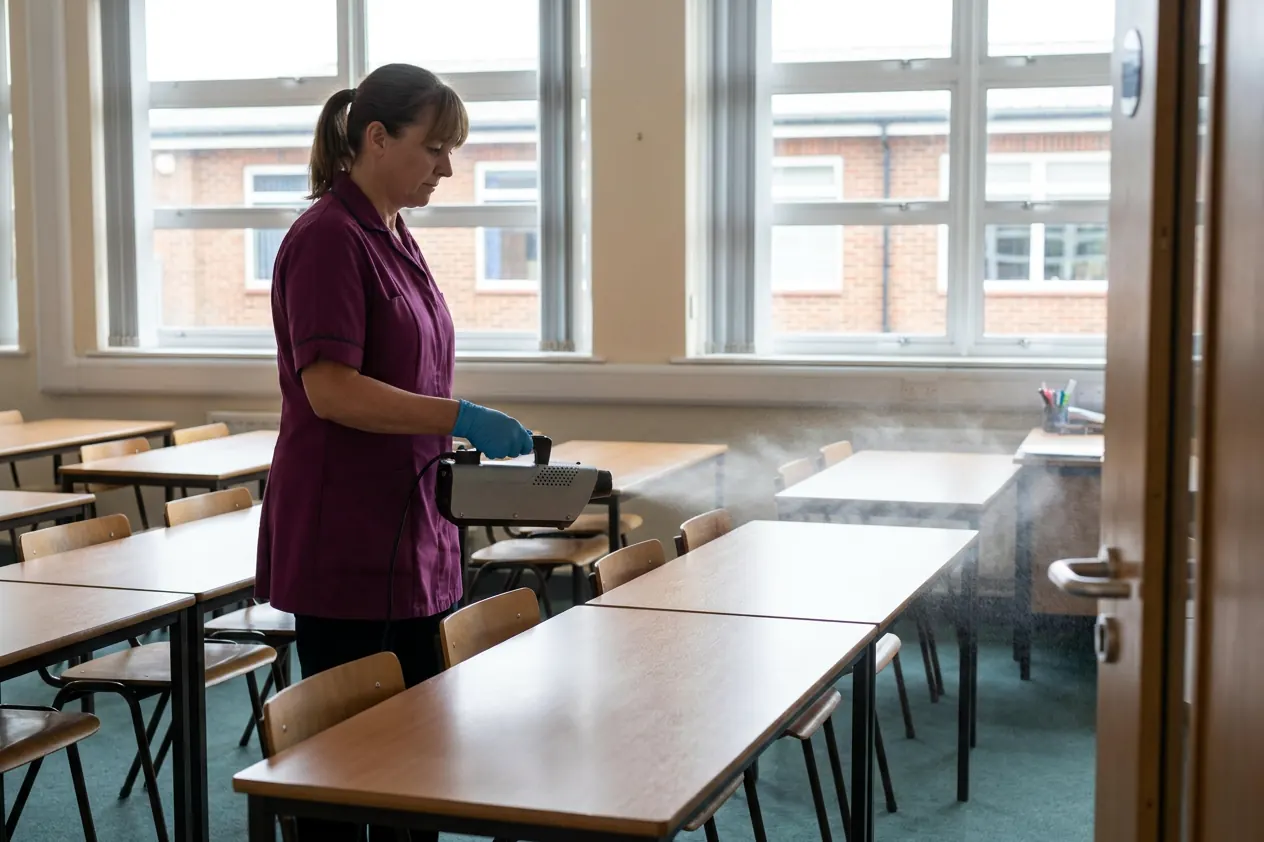
What does sanitisation & disinfection include in Newtownabbey?
- Outbreak cleans of affected rooms and toilets
- Increased toilet and touch-point frequency during outbreaks
- Fogging where appropriate, as an addition to manual cleaning
- Touch points cleaned then disinfected
Why Newtownabbey schools use us
Our teams use colour-coded cloths and mops, so equipment used in toilets never goes near classrooms or kitchens.
In Northern Ireland we plan holiday work around local term dates; the summer break here usually runs July and August, which is when most deep cleans, floor sealing and carpet work happen.
Newtownabbey at a glance
- Area
- Northern Ireland
- Region
- Northern Ireland
- Postcode area
- BT
- Inspectorate
- the Education and Training Inspectorate
- Summer holiday
- Usually July and August
- Nearby
- Armagh, Newry and Coleraine
What happens next
- 1Tell us about your school
- 2We survey the site and agree frequencies
- 3You receive a clear quote and schedule
- 4Cleaning starts, with regular audits
Other school cleaning services in Newtownabbey
Sanitisation & Disinfection near Newtownabbey
Frequently asked questions
How much does sanitisation & disinfection cost in Newtownabbey?
As a guide, sanitisation & disinfection in Newtownabbey is typically around £140–£540 per visit, reflecting labour costs in Northern Ireland. Your fixed quote follows a free site survey.
Do you cover schools near Newtownabbey?
Yes. Alongside Newtownabbey we cover Armagh, Newry and Coleraine and the rest of Northern Ireland.
What should a school do during a vomiting outbreak?
Follow UKHSA guidance and your local health protection team's advice. Typically that means more frequent cleaning of toilets and touch points with a chlorine-based disinfectant, and safe cleaning of any spillages.