
Newton Aycliffe · DL postcodes · County Durham
Sanitisation & Disinfection in Newton Aycliffe
Sanitisation & Disinfection for schools in Newton Aycliffe and the surrounding DL postcodes, planned around your timetable and delivered by DBS-checked staff who know how a school works.
Many Newton Aycliffe schools share a campus with a nursery or children's centre, which we can include in the same contract.
Guide price in Newton Aycliffe: £140–£540 per visit.
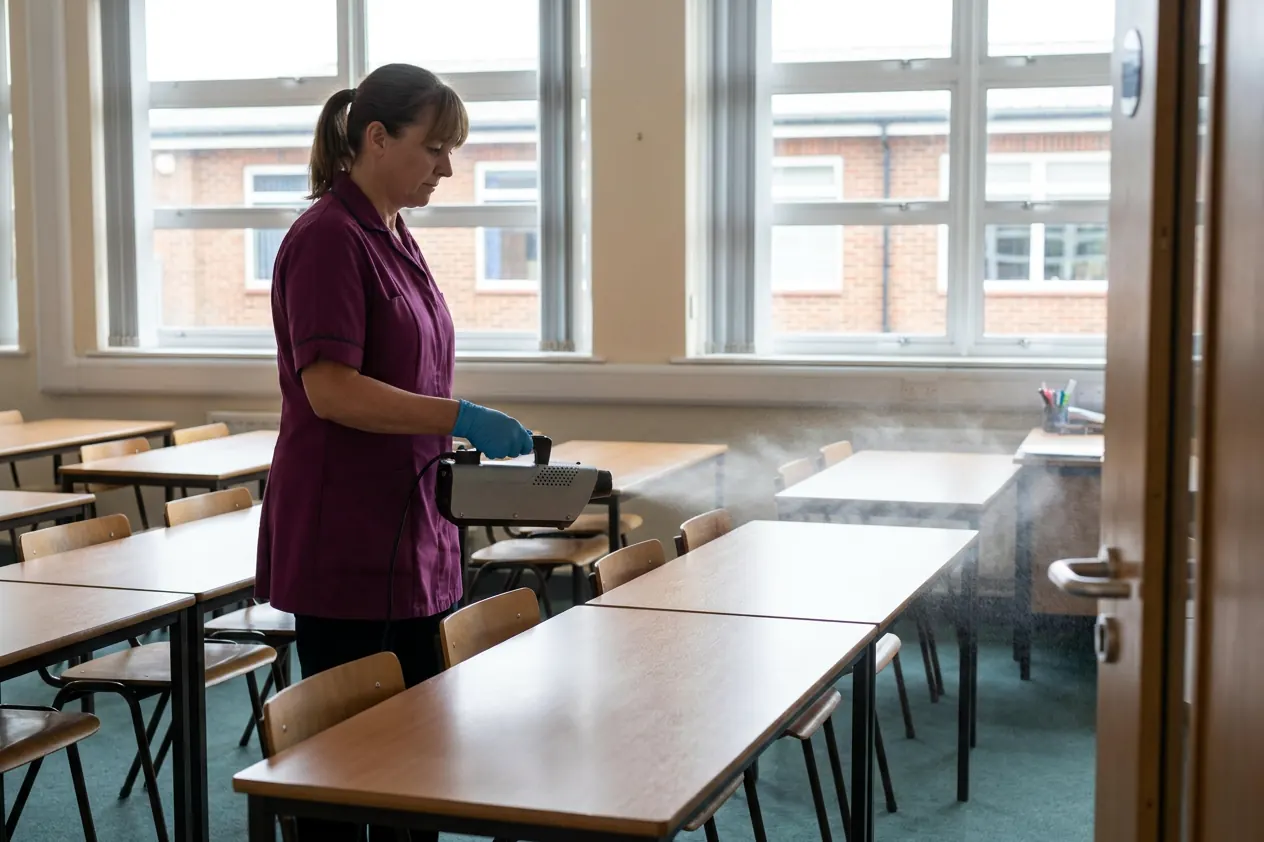
What does sanitisation & disinfection include in Newton Aycliffe?
- Fogging where appropriate, as an addition to manual cleaning
- Touch points cleaned then disinfected
- Outbreak cleans of affected rooms and toilets
- Products effective against the organism involved
Why Newton Aycliffe schools use us
When something is missed, the school has one number to call and a supervisor who puts it right, usually the same day or next morning.
Our County Durham teams cover Newton Aycliffe alongside Stockton-on-Tees, Consett and Peterlee, which keeps travel short and lets us cover sickness quickly from nearby staff.
Newton Aycliffe at a glance
- Area
- County Durham
- Region
- North East
- Postcode area
- DL
- Inspectorate
- Ofsted
- Summer holiday
- Usually late July to early September
- Nearby
- Stockton-on-Tees, Consett and Peterlee
What happens next
- 1Tell us about your school
- 2We survey the site and agree frequencies
- 3You receive a clear quote and schedule
- 4Cleaning starts, with regular audits
Other school cleaning services in Newton Aycliffe
Sanitisation & Disinfection near Newton Aycliffe
Frequently asked questions
How much does sanitisation & disinfection cost in Newton Aycliffe?
Schools in Newton Aycliffe can expect sanitisation & disinfection to cost in the region of £140–£540 per visit. Use the guide-price tool for a figure based on your school's size.
Do you cover schools near Newton Aycliffe?
Yes. Alongside Newton Aycliffe we cover Stockton-on-Tees, Consett and Peterlee and the rest of County Durham.
What should a school do during a vomiting outbreak?
Follow UKHSA guidance and your local health protection team's advice. Typically that means more frequent cleaning of toilets and touch points with a chlorine-based disinfectant, and safe cleaning of any spillages.